Triglycerides Explained: Why Your Number Jumps Around
The most variable number in your blood test, and what actually moves it.
Triglycerides are fat. Not metaphorical fat, not "bad cholesterol's cousin" fat, actual fat. Chemically, one triglyceride molecule is just three fatty acids stuck to a glycerol backbone, which is the same basic structure as the oil in your kitchen cupboard. Your body uses it as its main energy store: eat more calories than you burn, and the liver packages the surplus into triglycerides and ships them out to fat cells for later. Skip a few meals, and the process runs in reverse, releasing triglycerides back into the blood to keep your muscles and brain fuelled.
So where does a high or low number come from? Diet is the obvious driver, and not just fat. Sugar and alcohol are converted to triglycerides by the liver just as readily as bacon is. Genetics matters too. Some people have inherited variants that make their liver overproduce triglycerides or clear them poorly, and no amount of salad will fully fix that. Body weight, activity levels, thyroid function, and certain medications all play a part as well. A "normal" fasting result sits below 1.7 mmol/L; above 2.3 mmol/L is considered high, and there's a genuine minority of people who sit up there consistently, whatever they eat.
But here's the part that trips people up: triglycerides are the most variable thing in a standard lipid panel, by a wide margin. Published studies put day-to-day biological variation at 20 to 30%, and that's before you've eaten anything unusual. Cholesterol moves as well but not as dramatically. Triglycerides also follow a body clock, peaking in the early morning even when fasting, and they respond fast to whatever you last put in your mouth.
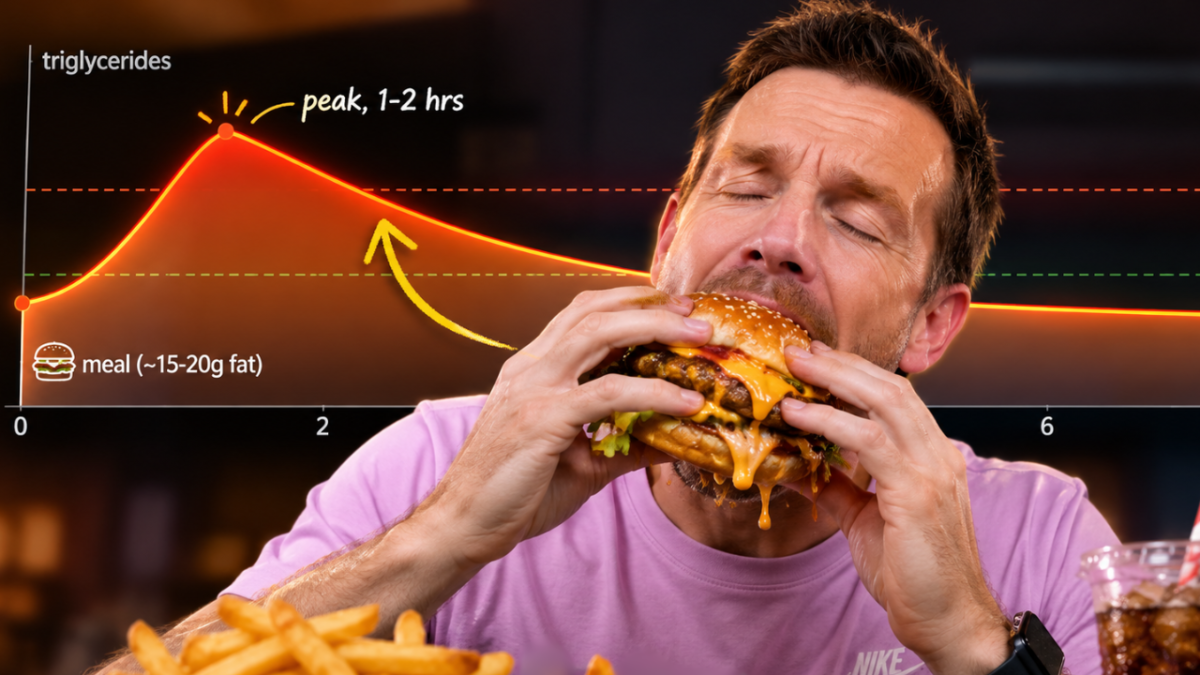
Think of it this way: a single meal with about 15-20g of fat, roughly a fried breakfast or a slice of cheesecake, can push your triglycerides up by 20 to 75%, and that bump can hang around for six to eight hours before it clears. If your fasting level is already elevated, the swing is bigger, not smaller. A heavy Saturday night, a birthday cake, a skipped run, or simply testing four hours after lunch instead of fasted, and the number on screen looks like a different person gave the sample.
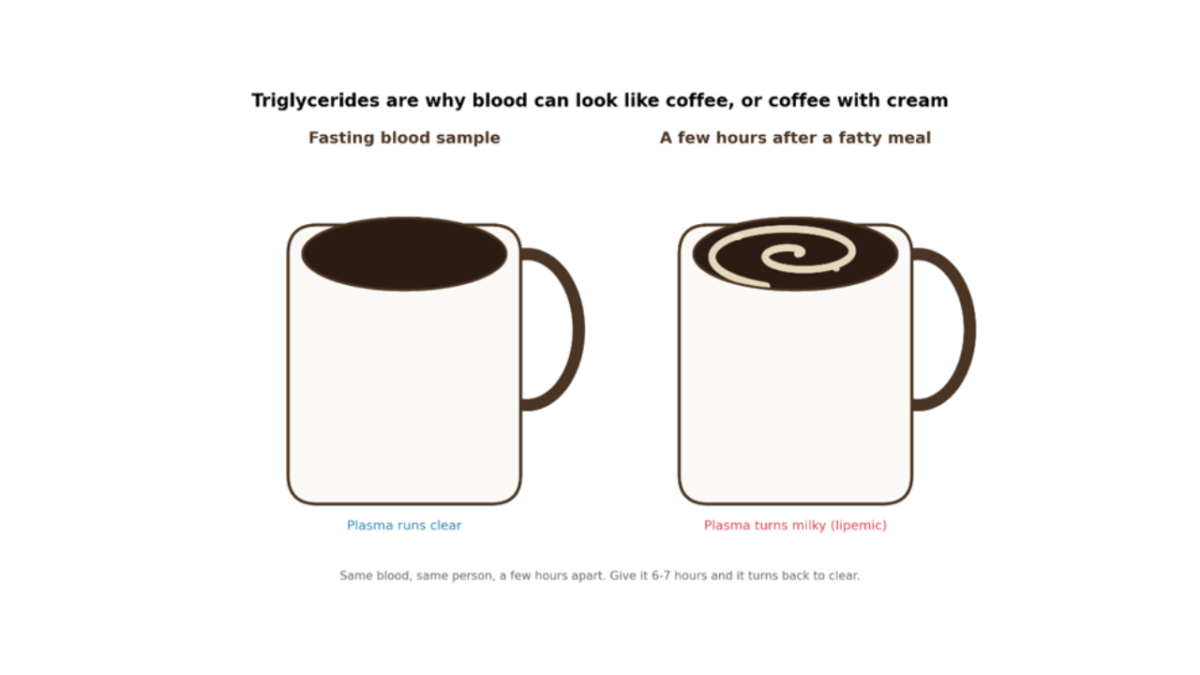
A useful visual for customers: picture pouring a splash of cream into black coffee. Triglycerides are why blood plasma can go from clear to visibly milky after a fatty meal. Give it a few hours and it clears again, coffee back to black. That's not your arteries changing overnight, that's just breakfast working its way through.
Get in touch to find out more
